
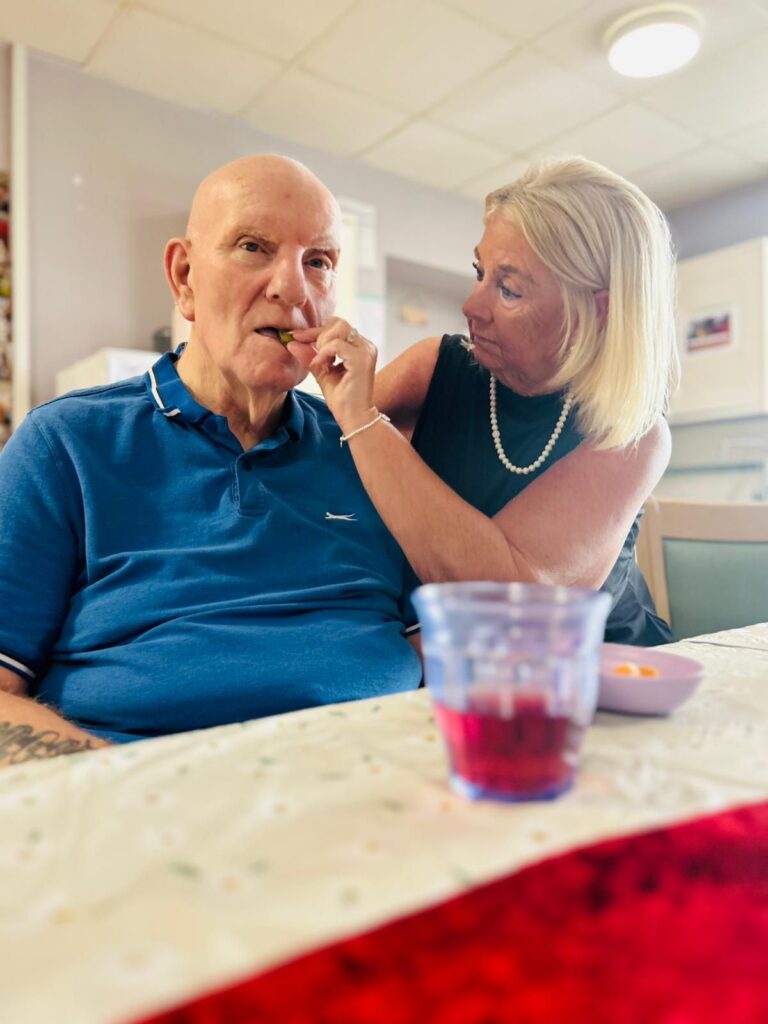
Sometimes the most important part of care is not what you say, but how able you are to see the world through another person’s eyes. At Heanton Nursing Home, this understanding shapes everyday life. For Pamela “Pam” Manning, working in dementia and complex care has taught her that distress rarely comes from nowhere. It often comes from fear, loss or confusion that feels completely real to the person experiencing it. Over time, she has learnt that responding to that emotional reality, rather than correcting it, can be the gentlest form of care.
A New Beginning, Later in Life
Pam did not begin her working life in social care. After many years working as a funeral arranger, she and her husband made the decision to move to North Devon, a place they had long loved from holidays spent in Croyde. The move followed a period of personal loss, and what was intended to be a peaceful retirement soon became a time when she found herself wanting renewed purpose and connection.
“I thought retirement would be the dream,” she says. “But after a while we both realised, we needed a reason to get up, get out and meet people again.”
Hearing about a nearby dementia care home, she applied for a part-time role despite having no previous experience. “I remember thinking, I’ve never done care before, how hard could it be?” she said with a smile. “I soon learned that care is one of the most skilled and meaningful roles you can do.”
Her motivation was deeply personal. Having seen how dementia had affected someone close to her, she carried with her determination. “My lovely uncle Bill had been in a Dementia Home the very year we moved and had sadly passed away, my cousin sent me photos of him, and he didn’t look like Uncle, he was unshaven and generally unkempt with a blank expression. It broke my heart. He had been a proud smart man. After his funeral I vowed that somehow, I was going to make a difference and learn about Dementia in memory of my uncle. Hello Heanton.”
The Moment That Changed Everything
Five years on, Pam remembers her first day as though it were yesterday. Dementia care was far more complex than she had imagined and left her wondering whether she had taken on more than she realised.
Among the first people she spent time with was Lillian, a resident (that the home fondly refers to as family members) whose anxiety and restlessness often made the day unsettled. She would walk the hallways for long periods during the day. At first, Pam simply watched other carers with her, unsure what to say or do, just learning and observing. “We must have walked those hallways 15 or 20 times,” she recalls. “I remember thinking she must be as bored as I was, but there was something about Lily. I liked her. I was curious about her. That’s what made me come back”
It was during one of those walks that a small moment changed everything.
Lillian suddenly stopped and pointed towards the floor, admiring something Pam could not see. “Flowers,” she said, “beautiful blue flowers.” Instead of correcting her, Pam chose to respond to what Lillian was experiencing. She bent down, pretended to pick the flowers up, and suggested they take them home to place in a vase before baking a cake for the children returning from school.
“The smile on her face and the warm twinkle in her sea-blue eyes melted my heart quicker than ice cream on a hot beach,” says Pam. “Then Lily reached out, grabbed my hand and said softly, ‘Come on, let’s go home.’ That was the moment I understood the word connection.”
From then on, Pam approached her time with Lillian differently. “I realised it was because I didn’t say, ‘There’s nothing there, Lily. I stepped into her reality. I lived those hours in her world. Saw it through her words and actions, in her time, on her terms,” she explains. “That’s when everything changed between us. She trusted me, and that trust meant everything.”
“We all fell in love with Lily” She said, “nothing I done, Lily showed me her world, her reality living with dementia and I had the privilege of peeping into it from time to time, that stood me in the perfect place to grow and learn.”
Over the following years, their bond continued to grow. Whether encouraging her to take medication, supporting her with personal care, or simply sitting beside her singing ’their song’ You Are My Sunshine, Pam learned that reassurance often came not from explanation, but from presence and familiarity.
“Lillian taught me how to be a carer” she shared “that’s when I knew that actually I might be quite good at this dementia care, think I might stay.”
Pam would go on to spend three years caring for her, building a friendship that shaped the way she supports people to this day, and later had the honour of taking part in her final farewell, a moment she still speaks about with such pride and affection.

Pam and Wendy, a family member at Heanton Nursing Home
Learning the Language Beyond Words
Over time, Pam began to recognise how behaviour often communicates what words cannot, a lesson shaped largely through her time supporting Lillian.
“Once I had entered into Lily’s reality, I started noticing the change in her,” she explains. “Over a short period of time she became more relaxed, more confident and much happier in herself. I would go home thinking about it, being in her reality was helping her feel calmer.”
That realisation also connected with something from Pam’s own childhood. “I used to have night terrors when I was young,” she recalls. “I could see things in the dark shadows, and nothing anyone said could convince me they weren’t there, because to me they were real. That’s when it struck me, this must be what it feels like for someone living with dementia. If something feels real to them, correcting them doesn’t remove the fear.”
Instead, Pam learned to respond to what the person might be expressing through their actions. If someone reached out as though holding a cup, she would gently offer a drink. If someone appeared unsettled, she would look beyond the behaviour to understand whether they might be tired, hungry, uncomfortable or in pain.
“Each family member has their own way of showing you what they need. Once you learn their language, you can respond in the right way, and that’s when you see them start to relax and trust you.” She explains
It was through experiences like this that Pam began to understand what is often described in dementia care as the careful use of therapeutic lies.
The phrase can sound stark. But in practice, it is not about deception. It is about responding to the emotional reality someone is living in. Validation means acknowledging the feeling without correcting the belief, for example, allowing someone to talk about their mum without challenging whether she is still alive. A therapeutic lie goes further. It offers reassurance that may not be factually accurate, but prevents immediate distress, such as gently saying, “She’s safe, you don’t need to worry,” when someone is panicked or grieving.
The distinction matters. In dementia and complex care, repeatedly correcting someone who cannot retain new information can mean they experience shock or loss again and again. In those moments, strict truth-telling can unintentionally cause harm.
For Pam, therapeutic reassurance is never automatic. It is considered, proportionate and rooted in knowing the person. The question is always the same: what response will reduce distress and protect dignity right now?
Supporting Families and Each Other
Pam’s previous career supporting bereaved families continues to shape the way she works today. She understands that moving a loved one into care can bring feelings of guilt, uncertainty and grief. “Families need just as much reassurance as the people we care for,” she says. “Sometimes they just need someone to sit with them, make a cup of tea, and remind them they’ve made the right decision.”
From the moment families arrive, Pam works to ensure they do not feel like visitors but part of the home’s extended family, encouraging them to make drinks, spend time in shared spaces and feel at ease alongside the team. “When families feel part of the home, everything changes,” she says. “They relax, and that helps their loved one relax too.” She recalls one woman who struggled with guilt after moving her husband into care. Pam spent time listening, offering reassurance and gentle humour, and over time the woman grew more confident and began attending the informal Tea & Chat gatherings. Months later, when another visitor arrived overwhelmed by her husband’s diagnosis, that same woman moved to sit beside her, offering comfort from her own experience. “That was when I realised how powerful simple conversations can be,” Pam reflects. “Families were supporting each other.”
That same sense of support extends to the team around her. Believing that understanding each other’s strengths and limits is just as important as understanding the needs of family members. “We all have different strengths,” she says. “Some people are brilliant at personal care; others are excellent at supporting someone who finds eating or drinking difficult. When you match the right person to the right moment, both the carer and the family member feel more confident, and you can see the difference straight away.”
She also recognises that care can be emotionally demanding, which is why the team look out for one another. “We all have times when we feel overwhelmed,” she explains. “That’s when someone steps in, gives you a moment, and you do the same for them another day. Supporting each other is how we make sure we can keep supporting everyone else.”

Pam and Pete
A Role That Became a Purpose
The lessons Pam learned through Lillian, the families she supports, and the team she works alongside continue to shape the way she cares every day. “I never expected to find myself working in dementia care,” she says. “But once I understood what the role really meant, being there for someone in the moments they feel most vulnerable, I knew I wanted to stay.”
Now, five years on from her first day at Heanton, Pam’s journey continues to reflect something simple yet powerful: that meaningful care is not built on routine alone, but on relationships, connection and by people who choose to make a difference every single day. “This is not just a job, Heanton to me is home. They don’t need me; I simply need them!”
To learn more about working with Heanton Nursing Home, or to begin your own journey in care, please visit Devon Nursing Home – Join our Team – Heanton Nursing Home