
Evolve Care Group Explores Creating Connections Through the Lens of Dementia Care
Every person receiving care, whether in a care setting or at home, brings with them their own life experiences, personality, preferences and ways of communicating. Because of this, building meaningful connections is not always straightforward and often requires patience, understanding and a willingness to see the world through their eyes.
Some people may be navigating a cognitive journey that affects how they process information, communicate or make sense of their surroundings. Others may be living with a Dementia, which can influence how they experience the world around them. Some people may express distress or communicate their needs in ways that are less easily understood, while others may value their independence and need time to develop trust and feel comfortable accepting support.
Whatever their circumstances, taking the time to understand the individual behind the diagnosis, behaviour, or care need, is often the foundation for building genuine relationships and providing meaningful support.
Throughout the year, people working across the Evolve homes in Devon, Wales and Somerset, alongside those working within our Central Support office, take part in training days at the Evolve Care Academy in Bristol. The thinking behind this is simple; regardless of role, everyone should understand the people living within our homes, their life experiences, preferences and the approaches used to support them.
Whether someone works in care, catering, housekeeping, maintenance, administration, or anything in between, they are still part of the environment that family members call home. By developing this understanding, people across every department can better appreciate the impact they have on daily life within the home and the part they play in supporting those who live there.
A Communications Perspective: What Training Taught Me About Care
Having worked within the communications team for almost a year now, I regularly visit our homes and spend time with family members and those supporting them. As someone with no previous experience working in social care, I initially felt out of my depth when I entered the sector. But I was amazed by how much I had learned about Dementia care and care more broadly in just a few short months.
Attending training gives me valuable context when listening to family member and team member stories and sharing them with others. What I find particularly valuable is hearing directly from those attending the training. The discussions often draw on real experiences from the homes, providing an insight into the situations people encounter, the decisions they make and the thinking behind them. It helps bring the training to life in a way that reading or e-learning never could.
What Makes a Person Feel Safe?
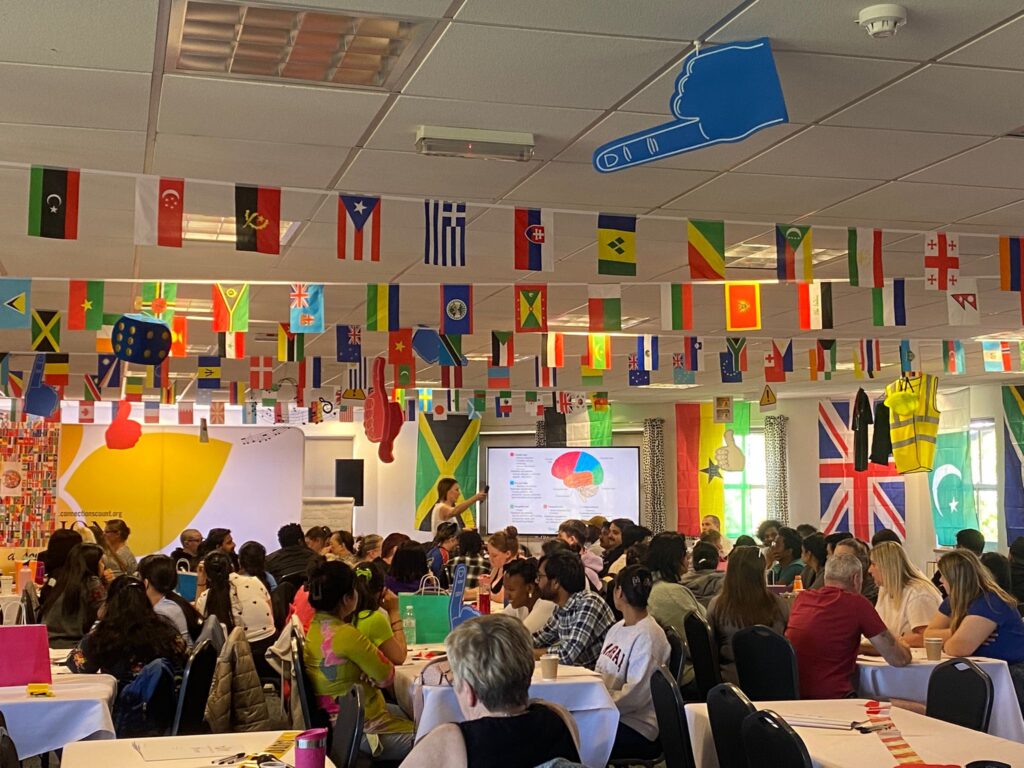
The most recent training sessions held in the training room, Seen, Heard, Valued, were designed to explore why creating connections with the people who live with us is so important, and how this helps those living with us to feel safe.
As we entered the training room, the ceiling was covered in a jumble of different items. There were uniforms from a range of occupations, including a nurse’s uniform, police uniform, high-vis jackets and hard hats. Foam football hands hung alongside Christmas decorations, while flags from more countries around the world lined the edge of the room. Together, these objects represented the many things that can make up a person’s identity; where they come from, their culture, the work they once did and the life they have lived.
As the session began, we discussed Thomas Kitwood’s philosophy and why attachment, inclusion, occupation, identity, comfort and love are so important, particularly for people living with a Dementia.
Eve Carder, Clinical Lead at Evolve, explained, ‘Our job is to keep people safe. It is as simple as that. What’s more complex is what a person needs in order to feel safe.’
What I understood from this was that it is not enough for people living in our homes to simply be physically safe. They also need to feel emotionally and mentally safe within the environment around them and the people supporting them each day.
There were discussions around why someone living in our homes may not always feel seen, heard or valued, and how a lack of meaningful connection and understanding can leave a person feeling overlooked or alone. It was explained that if our teams are unable to truly connect with the people living in our care, it becomes far more difficult to understand what they need.
The Big Question
On the tables in the training room were a number of headbands with large question marks attached. We were encouraged to put them on and consider what they might represent. To me, they symbolised the idea that a person is only an ‘unknown’ until we take the time to ask the right questions and truly get to know them; they are, essentially, a big ‘question mark’ until we peel back the layers.
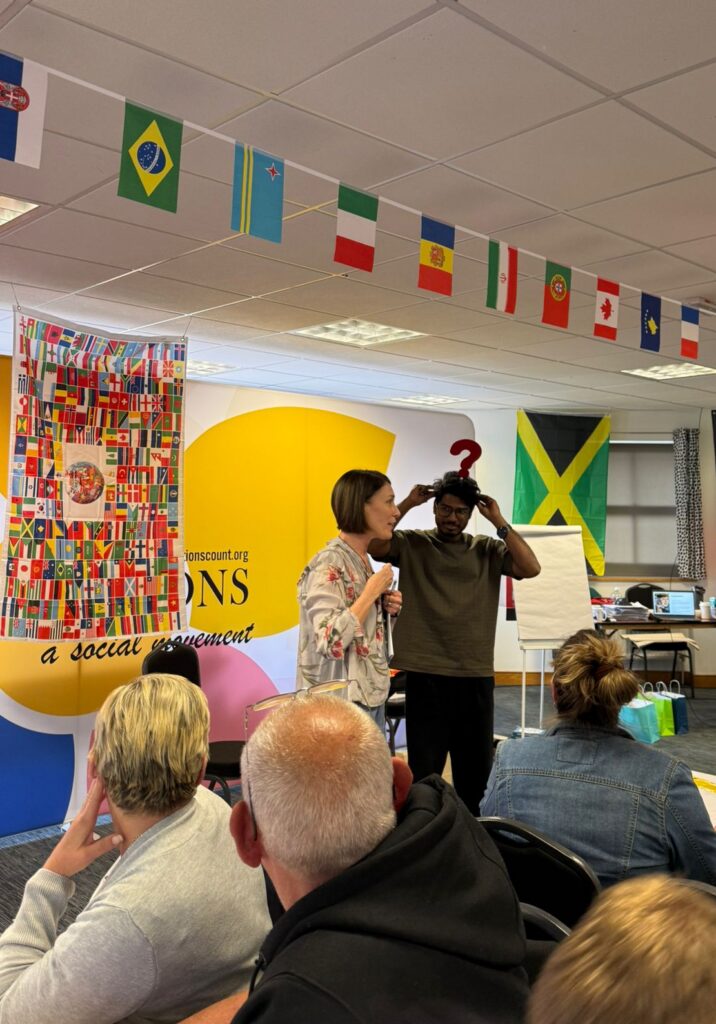
As I am still learning what it means for someone to be living with a Dementia, or on a cognitive journey, I had not considered that some people living in our care may not be able to tell us about themselves or their life history, and may also have no loved ones around them who are able to fill in those gaps for us.
Eve explained that, for some people, being asked multiple direct questions can leave them feeling confused or overwhelmed, causing them to shut down and struggle to respond.
We were also shown brain scans of people living with a Dementia, illustrating how brain cells shrink and die as the disease progresses, leaving parts of the brain darkened and permanently damaged. It was explained how this loss of brain function can affect cognition, including a person’s ability to problem solve, regulate emotions, communicate and make decisions.
What the question mark headbands actually represented was the experience of people living with a Dementia or cognitive condition that affects their ability to answer questions or express themselves in the way they once could, because parts of the brain are no longer functioning properly.
I found myself imagining what it might feel like to be asked multiple questions while being unable to connect memories, thoughts or experiences together clearly in my mind, and realised how confusing and frustrating that experience must be.
Because direct questioning may not always be the most effective way to connect with or understand our family members, a number of exercises had been designed to help team members adapt their approaches in more complex situations. The aim was to give people the confidence and tools to think creatively, work outside the box and find ways to ‘change the moment’ in order to create meaningful connection.
Image Association
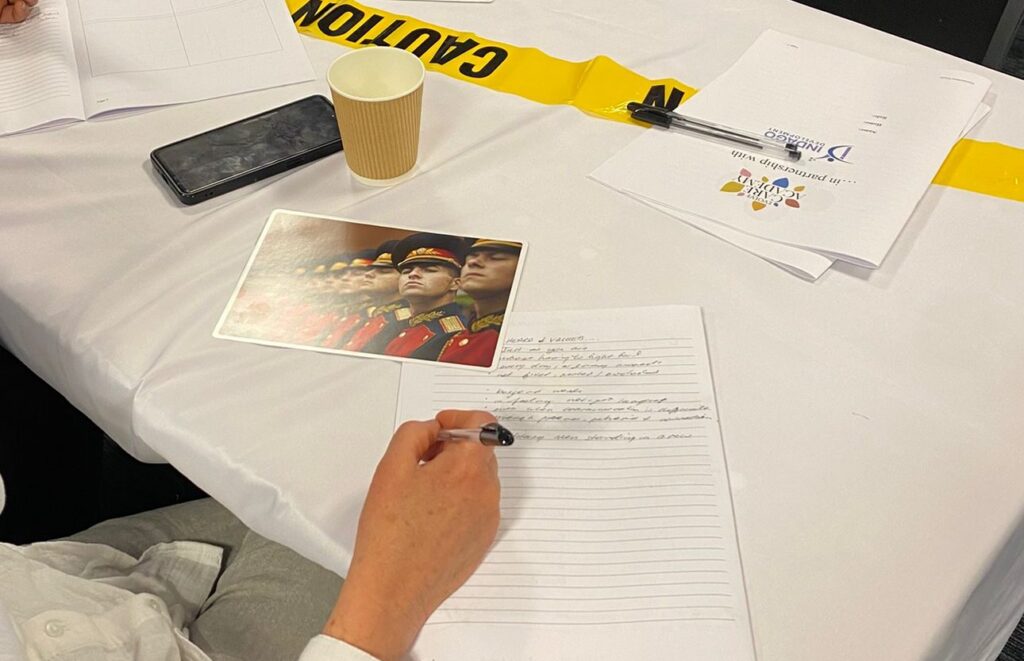
The first exercise involved each table receiving a set of Q-cards, with every person given a card displaying a random image of a person, place or object. We were then asked to use the images to build a story together, connecting each card to the next as the conversation moved around the table.
For example, one of the cards showed people running a marathon, so I explained that from a young age I had always wanted to run long distance but had been held back by shin splints (which was actually true!) The next person’s card showed people dressed in military uniforms, so they continued the story by saying that, once they’d given up the dream of being a marathon runner, they had joined the army because they still wanted an active lifestyle, and the story carried on from there.
The purpose of the exercise was to respond to the previous person’s story and relate it to your own, using the images as inspiration while keeping the conversation connected. In practice, this could look like listening to a family member sharing memories or experiences and finding ways to relate to what they are saying, helping to create opportunities for further conversation, connection and trust.
 A Bag of Stuff
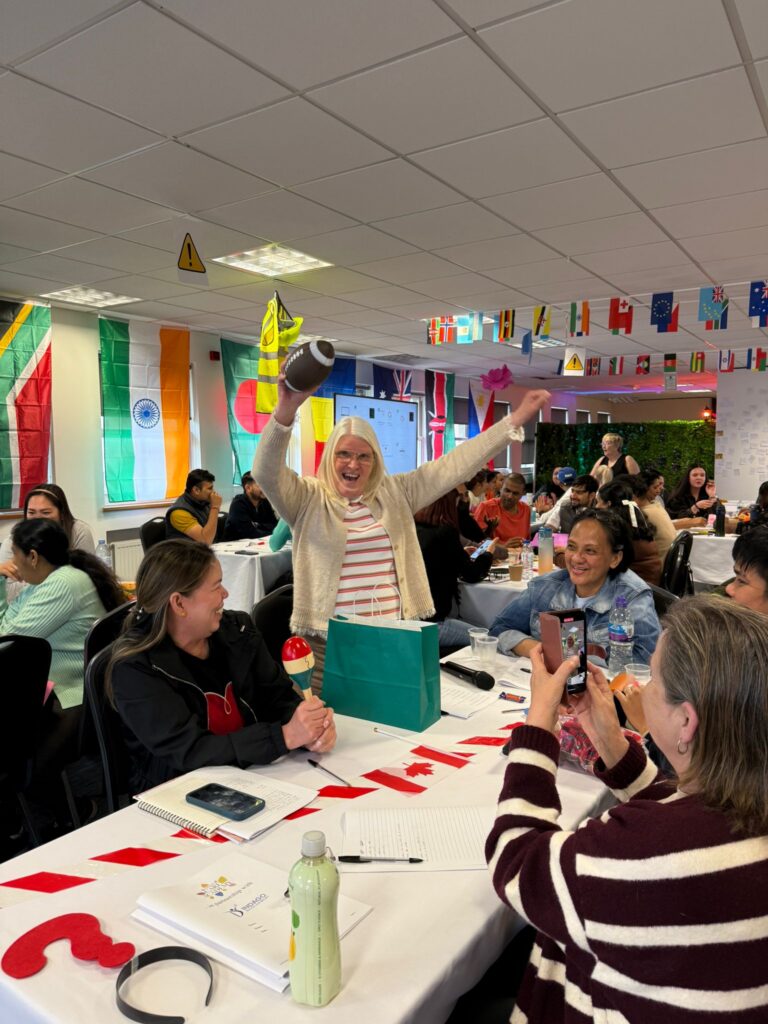
In another exercise, bags containing five random objects were placed on each table. We were invited to take out one item at a time and create a story inspired by it with the rest of the group.
The exercise encouraged storytelling as a way of connecting with others, using everyday objects as a starting point for conversation. The stories could be personal memories, stories heard from others or completely imagined. What mattered most was the act of sharing and creating something engaging together.
Something as simple as picking up a beach towel and talking about a sunny holiday in Spain may encourage someone else to begin speaking about their own experiences of travelling, holidays or time spent with loved ones, bringing familiarity, comfort and positive emotions into the conversation.
These exercises really brought home to me how caring roles can give people the opportunity to use creativity in meaningful ways to build trust and connection. Alongside exploring ways to create connection, we also discussed the things that can cause people to disconnect or feel controlled rather than supported.
Dementia Language
In one corner of the room stood a series of mock walls spray painted with phrases such as ‘no’, ‘don’t do that’ and ‘not now’. We discussed how language like this can feel restrictive and, over time, may contribute to a person feeling a loss of independence, choice and autonomy. It was explained that, in some situations, constantly feeling controlled rather than supported can lead to distress and expressive behaviour.
Even when these things are said with the intention of keeping someone safe, they can still leave a person feeling emotionally unsafe by creating a sense of lost control. We explored how words, tone, touch, presence and attention can all shape the way a person experiences the world around them and how, when used negatively or without thought, they may leave a lasting emotional impact.
We explored how these same things can also be used positively to create an emotional shift and help someone feel reassured, calm and connected. This may be through using the right words in a gentle or friendly tone, meeting someone where they are in their journey and using language that makes sense to them. It may also be through touch, such as holding a person’s hand to show you are there with them rather than trying to direct or control them, or by lowering yourself to their level and creating a sense of reassurance and presence. Attention was also discussed in terms of truly getting to know the person and not losing sight of the identity behind the diagnosis.
Our care teams have the ability to influence the tone and energy of the day. While they may not always be able to control how someone presents in that moment, they can control their own response and the way they approach challenging situations.
Alongside the care provided by our teams, environment also plays a significant role in helping family members feel at home, comfortable and safe within the spaces around them.

The Importance of Environment
As a last exercise in the training, we were asked to explore an area of the training room where a number of simulated environments had been built. Bedrooms, living rooms and dining rooms were set up as examples of inviting and colourful environments that encouraged stimulation, alongside environments which felt uninviting, dull or institutional, to show the impact and importance of creating spaces that feel positive, homely, engaging and personal.
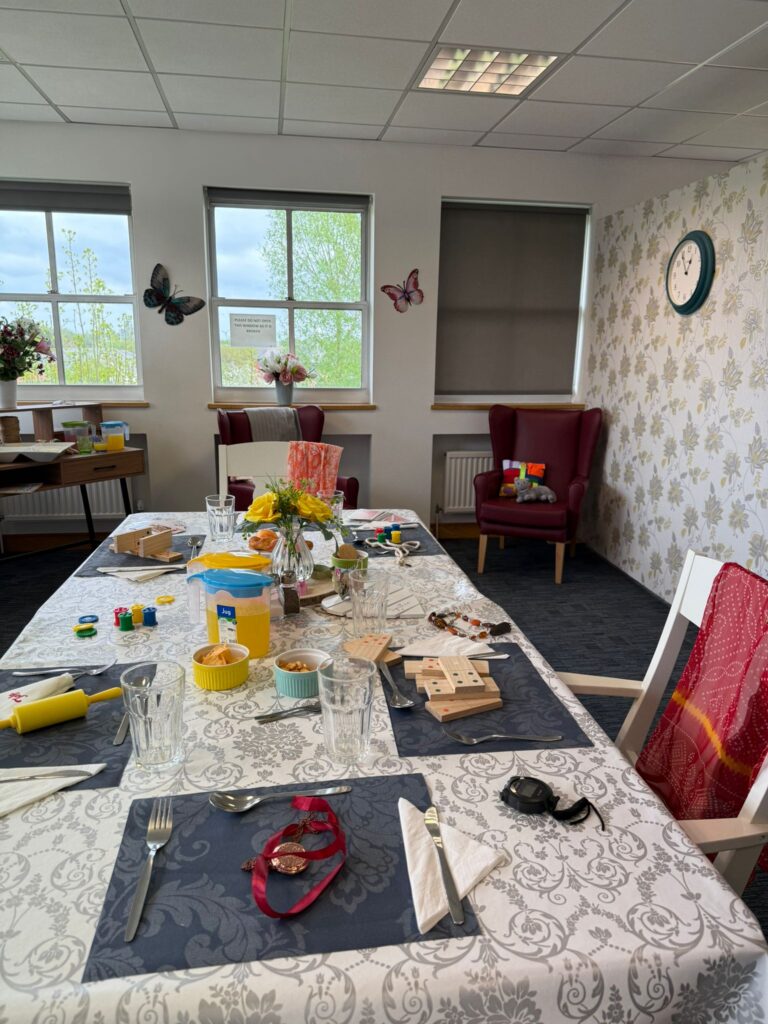
I recalled a similar exercise from the first training session I attended at the beginning of my role and found it fascinating that dining tables within the homes may have miscellaneous objects placed on them, such as puzzles, colouring books or memory cards, to encourage family members to interact with them and create opportunities for conversation and engagement.
These are tables set for more than just a meal. A soft toy, or a newspaper become something to pick up or look at while sitting down to eat. For those who take a little longer, or don’t always feel like eating, having something nearby to focus on and engage with can make all the difference.
And for people living with a Dementia or are on a cognitive journey, they may not always have the words, or no longer able to process and express the desire, to engage with an activity or task, but when they come across something in front of them, it may naturally spark curiosity, familiarity or engagement.
As someone who initially saw these dining tables as cluttered with objects unrelated to mealtimes, the way I now understand the dining experience has changed dramatically. It is not simply about eating a meal, but about creating opportunities for comfort, connection and engagement, just as all environments throughout the home should aim to do.
Speaking about the importance of creating a true sense of home, Eve shared, ‘We are not creating institutions, we are creating homes, places of safety, of creativity and hopefully magic.’
What I Took Away
I know there will always be more for me to learn about care and Dementia care. Leaders like Eve Carder and the wider clinical team have so much expertise and decades of experience that I cannot hope to gain just by attending a few training sessions
What I have learned so far, however, has left me genuinely moved and inspired. The idea that, no matter where someone is on their cognitive or Dementia journey, there are still ways to connect with them; the challenge is simply finding out how to reach them.
To read more about training, learning and development provided by Evolve Care Group in their Evolve Care Academy, visit https://www.evolvecareacademy.com/