
Dementia Care Home in Cwmbran

What happens when telling the truth causes distress rather than comfort?
In dementia care, this question arises more often than many people realise. People living with a Dementia often continue to experience deeply held roles and routines that no longer align with the world around them.
Memory loss, time confusion and altered perception can make everyday life feel unpredictable and unsettling. In these moments, responding with rigid honesty, however well meant, can unintentionally cause distress. This is where the concept of therapeutic lying comes into focus.
Therapeutic lying is not about deception for ease or avoidance. It is a carefully considered, compassionate response used to reduce anxiety and protect dignity. It recognises that when someone can no longer process certain truths, repeatedly correcting them can feel like reliving loss over and over again. Instead of forcing someone into a reality they can no longer engage in, carers gently meet them in the reality that they are, in that moment, living in. At Thistle Court Care Home, this approach is lived out every day.
When Identity Comes First
At Thistle Court Care Home, this approach can be seen clearly through the daily life of Vera. She has spent over 50 years as a carer. So, caring for others was not simply her job, it shaped who she is. Although dementia has changed how she experiences the world, that deep sense of responsibility and desire to care has never left her.
To Vera, she is still working. She is still a carer.
As she moves through the home, she does not take bread from the “bakery shop” for herself. She takes it to give to others. (a space intentionally designed to reflect familiar high-street settings, incorporating mock shops, a bus stop and sensory features such as an apple tree paired with an apple-scented air freshener, so people can continue routines that still feel natural and familiar.) When she picks flowers from the “flower shop”, they are not carried back to her room but placed in shared spaces so others can enjoy them. She straightens tables, tidies communal areas, and hands over pieces of paper and a pen, believing she is passing on important information, even though the page remains blank.

Vera at the Apple Tree
These actions are not aimless. They are purposeful acts of care. “Correcting” Vera, telling her she no longer works, that she does not need to do these things, or that she should stop, would not bring clarity. It would remove her sense of usefulness and identity and strip away a role that has defined her entire adult life.
Instead, the team at Thistle Court step into Vera’s reality. They allow her to care.
They support her to “work” safely, offering tasks that align with her lifelong identity and gently adapting the environment so her need to be active and helpful can be met without harm. This is one-way therapeutic lying is used at Thistle Court, to preserve purpose, comfort, and a continuation of life.
Beyond Words: Sensory Approaches at Thistle Court
Therapeutic lying at Thistle Court is not limited to roles or language. It also shows up in the way sensory experiences are used to support appetite and emotional connection.
Baking is often part of life in the home. Vera, alongside others, may be given a bowl with flour and water, spending time mixing, kneading and engaging with the process. When the “baking” is finished, the team step away and return with bread or cakes, which Vera believes she has made herself. What matters is not whether the bread truly came from her hands, but the sense of achievement, fulfilment and inclusion she experiences. She has worked. She has contributed. She has completed her task.


Tea with Home Manager Sarah whilst waiting for the bread to be ready
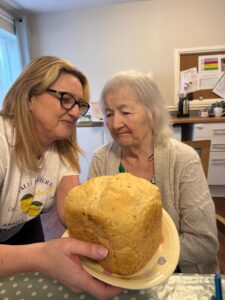
Vera and Home Manager Sarah
Bread-making is also used in another important way. Even for individuals who cannot eat solid food, the smell of fresh bread can be powerful. The home will place a slice nearby so the aroma can stimulate appetite and help moisten the mouth. When someone is later supported with a puréed or soft diet, they are often more comfortable, more receptive and better able to eat. This, too, reflects a form of therapeutic truth, one rooted in sensory experience rather than factual accuracy.
So, Is It Okay to Lie?
This is often the question families and carers struggle with most.
Is it right to allow Vera to believe she is still working? Is it wrong not to correct her when she believes she is caring for others?
Or is it more harmful to repeatedly tell her that the role which defined her life no longer exists?
At Thistle Court, these decisions are guided by weighing truth against the impact it may have. Telling Vera that she no longer works would not anchor her to reality, it would cause confusion, anxiety and distress. Allowing her to remain in a world where she is needed, capable and valued protects her emotional wellbeing.
Therapeutic lying, when used thoughtfully and responsibly, is not about dishonesty. It is about compassion, love, identity. It recognises that truth is not always kind, and that dignity sometimes means allowing someone to live within the reality that feels safest to them.
For Vera, caring is who she has always been and who she still is. At Thistle Court, that identity is honoured and respected, not corrected away. And in doing so, the team are reminded of something equally important: when words fall away, identity remains.
To learn more about Thistle Court Care Home please visit Thistle Court Life Captured – Thistle Court Care Home